AI Capsule Wardrobe Plan: Fewer Decisions, More Outfits
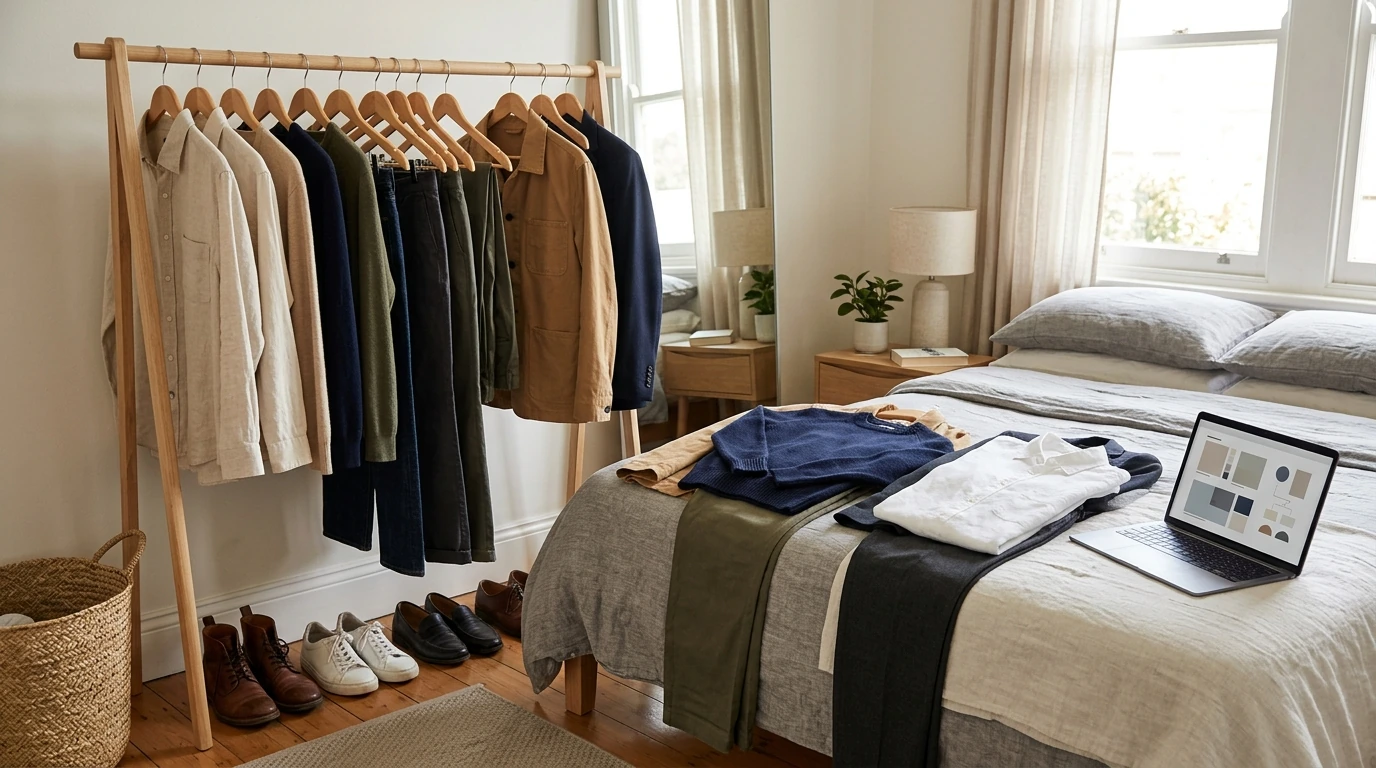
Your Perfect Wardrobe Without the Stress: A Smart Capsule Wardrobe Built for Your Real Life
A wardrobe that works shouldn’t require hours of scrolling, guessing, or buying “just in case.” Our team built a calm, practical way for you to get dressed with fewer decisions and more outfits you actually wear—using a smart capsule system that maps your lifestyle, preferences, and priorities into a clear plan you can follow. For more guidance, see Capsule Wardrobe Planner Essential.
What a “stress-free” wardrobe really means
“Stress-free” doesn’t mean you own 12 items or never shop again. It means your closet supports your actual week—and your clothes cooperate. For further reading, see CAPSULE WARDROBE PLANNER AESTHETIC.
- Fewer decisions in the morning because outfits are already compatible.
- Less closet clutter because every piece has a role (and repeats often).
- More confidence because you know what fits, what flatters, and what coordinates.
- Less impulse shopping because gaps are intentional—not random “might work” buys.
- A wardrobe that supports the week you actually live (work, weekends, events, weather).
That last point is the quiet game-changer: the goal isn’t “minimal,” it’s “usable.” When your closet matches your calendar, getting dressed stops feeling like a daily negotiation.
How the Smart Capsule Wardrobe approach works (without the overwhelm)
Many capsule methods fail because they start with rules instead of reality. Our system starts with your week, your climate, your comfort needs, and your laundry rhythm—then builds a capsule that can actually keep up.
- Start with reality: your typical week activities, dress codes, climate, and laundry routine.
- Define your style anchors: silhouettes, colors, comfort requirements, and shoes you’ll truly wear.
- Use AI as a planning partner: generate a capsule map and outfit pairings based on your inputs.
- Edit with intention: keep what already works, replace only what blocks outfit repeatability.
- Build a repeatable system: seasonal refreshes become small updates, not a full reset.
From closet chaos to a working capsule (quick comparison)
| If getting dressed feels hard… | A capsule system changes it by… |
|---|---|
| Too many options, nothing feels right | Narrowing to pieces that all mix-and-match |
| Outfits only work as “full looks” | Building around repeatable tops, bottoms, layers, shoes |
| Shopping happens when stressed | Shopping happens only to fill defined gaps |
| Closet doesn’t match lifestyle | Allocating pieces by real weekly needs (work/errands/events) |
| Decision fatigue every morning | Pre-planned outfit formulas you can reuse |
If you’ve ever felt “decision fatigue” before coffee, you’re not imagining it—constant choices drain mental energy. A capsule reduces choices without reducing style. For background on the concept, see Britannica’s overview of decision fatigue.
What’s inside the eBook (the parts that make the difference)
Our in-stock guide, Your Perfect Wardrobe Without the Stress — Smart Capsule Wardrobe eBook Using AI That Creates a Capsule Wardrobe for You, is designed to move you from “I have clothes” to “I have outfits”—without turning your weekend into a giant purge.
- A guided capsule framework that turns preferences into an actual list of pieces.
- Prompts that help you generate capsule options aligned with your style and constraints.
- A simple method for selecting a color palette that makes outfits easier to assemble.
- Outfit formulas to reduce daily decision-making while keeping variety.
- A plan for identifying “gap items” vs. “nice-to-have” items before shopping.
- A refresh routine for seasonal transitions so your wardrobe stays current without starting over.
If you enjoy structure, this pairs well with home reset projects too—many people tackle closet + one room together. Our team also keeps One Room, Real Progress: A Simple Step-by-Step Guide for Stress-Free Home Organization available as a simple companion for the “where will this all live?” part of the process.
Who this is for (and when it’s the right time to start)
A practical way to use it in one weekend (or in 20-minute blocks)
A calm capsule checklist
| Step | Goal | Keep it simple by… |
|---|---|---|
| Lifestyle snapshot | Match clothes to your week | List 5–7 common scenarios you dress for |
| Color anchors | Make mixing effortless | Choose 2–3 core neutrals + 1–2 accent colors |
| Closet triage | See what already works | Focus on items you reach for repeatedly |
| Capsule draft | Create a working set | Aim for versatility, not perfection |
| Gap list | Shop only with purpose | Buy to complete outfits, not to collect pieces |
If you like the idea of a time-bound wardrobe challenge, you might also enjoy the broader capsule inspiration behind Project 333—our approach is different, but the “less noise, more wear” mindset is similar.
What changes after a smart capsule is in place
And if you’re building a calmer home environment alongside a calmer closet, our team also offers Maximize Function, Minimize Clutter | Multifunctional Room Layouts eBook | Small Space Design Guide | Space-Saving Furniture & Smart Home Ideas to help you set up spaces that support routines (not piles).
FAQ
Does an AI-built capsule wardrobe still feel personal?
Yes—because the output is driven by your lifestyle, colors, comfort needs, and preferred silhouettes, then refined by your choices. The tool helps you see combinations and gaps faster, but you decide what stays and what goes.
Do new clothes need to be purchased to make this work?
No. You start with what you already own, then identify only the true gaps that prevent outfit repeatability. If you do shop, you’ll do it from a short, intentional list—not a vague feeling.
How many items should a capsule wardrobe have?
There’s no single “correct” number. Start with a workable set that covers your most frequent weekly scenarios and fits your laundry cycle, then adjust until you have enough repeatable outfits without excess.




Leave a comment