Boost Baby Communication Through Everyday Play
Your baby is communicating long before their first word. A look toward your face, a reach for a toy, or a delighted squeal can begin an exchange. When you notice and respond, playtime becomes a conversation—even when neither of you says much. You can practice this during routines you already share, without setting aside a special lesson.
Start by noticing what your baby is telling you
Communication includes more than speech. Your baby’s facial expressions, body movements, sounds, and attention can all offer clues about what interests them. When it’s practical, get face-to-face and follow their gaze. If they’re studying a cup, you might say, “You see the cup,” rather than trying to draw their attention to something else.
Try a simple pattern: your baby makes a sound or gesture, you respond, and then you pause. That pause leaves room for another turn. A response might be a sound, but it could also be a look, a kick, or a change in expression. You don’t need to fill every quiet moment; watching and waiting are part of the exchange.
Turn familiar games into back-and-forth moments
Copy a sound your baby makes, then wait to see what happens. You can also try peekaboo, a gentle song, or a wave. These games work best as shared moments, not performances your baby has to follow. If a song catches their attention, sing it again. If they look away or seem tired, pause or move on.
Small pauses can make familiar routines more interactive. While getting dressed, show your baby a sock and name it before putting it on. During a book, point to one picture and give them time to look. There’s no need to finish every page or keep a game going after your baby is done.
| Everyday moment | Playful thing to try | What to watch for |
|---|---|---|
| Getting dressed | Name an item as you show it, then pause. | A look, sound, reach, or change in expression |
| Floor play | Copy a sound your baby makes and wait. | Another sound or an attempt to take a turn |
| Looking at a book | Point to one picture and name it simply. | Attention to the picture, your face, or your voice |
| Bath time | Sing a short, familiar song with a pause. | Anticipation, movement, or a vocal response |
Keep your words simple and connected to the moment
Short, natural phrases give your baby words for things they can see or experience: “Here’s your cup,” “The ball rolled,” or “All done.” Name familiar people and objects as they come up, and repeat words when they fit. You don’t need to ask your baby to say them back.
When your baby tries to communicate, a warm response matters more than correcting a sound or testing vocabulary. If they reach toward a ball, you can acknowledge the reach, name the ball, and offer it if appropriate. You’re showing them that their signals can be noticed and answered.
Make room for different rhythms and needs
Babies develop communication skills at different rates, and they don’t all enjoy the same games. One baby may love a lively song; another may prefer a quiet look at a book. Even your own baby’s interest can change from one day to the next. Let their cues help you choose what to try and when to stop.
If your baby seems overwhelmed, try a quieter setting, a shorter exchange, or a familiar routine. If you have questions about hearing, communication, or developmental progress, talk with your child’s healthcare professional. For general reference, you can also explore the CDC’s developmental milestones and ASHA’s communication milestones from birth to age one.
Keep a few playtime ideas close at hand
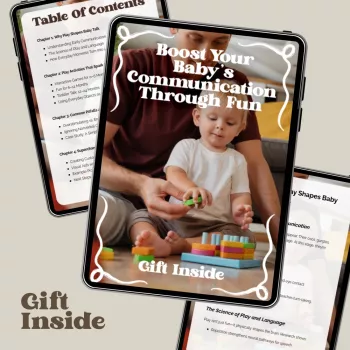
If you’d like a dedicated playtime resource, our Boost Your Baby’s Communication Through Fun digital download offers communication-focused guidance for parents and caregivers. It’s listed at $10.99. You can use it for ideas while still letting your baby’s interests—not a schedule—guide the moment.
Our team also knows that finding a comfortable place in the day for play can be its own practical challenge. If organizing a shared space would help, One Room, Real Progress is a separate home-organization guide, not a baby communication resource. You don’t need either guide to begin: choose one enjoyable exchange today, follow your baby’s lead, and let the conversation grow from there.
Before choosing, compare the product details with your daily routine, available space, care needs, and preferred setup. The strongest option is usually the one that fits the intended use clearly and remains simple to clean, store, and check before repeat use.
FAQ
Does my baby need special toys to practice communication?
No. Face-to-face games, songs, books, and everyday routines can all create opportunities for back-and-forth play.
What if my baby does not respond when I pause?
Give them time and watch for subtle responses, such as a look or movement. Keep the exchange relaxed, and speak with your child’s healthcare professional if you have ongoing developmental concerns.
Can caregivers use the same playtime approaches as parents?
Yes. Any attentive caregiver can notice a baby’s cues, respond warmly, and leave room for another turn.





Leave a comment