Smarter Streak-Free Windows: Robot Cleaner + Remote
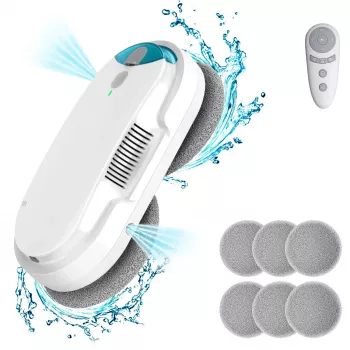
Smudge-Free Glass Without the Ladder: Meet the Automatic Window Cleaning Robot
Clean windows can change the feel of a room, but reaching high panes and keeping streaks away can be time-consuming and risky. An automatic window cleaning robot with smart water spray and remote control handles routine glass cleaning with consistent pressure, controlled misting, and guided movement—especially useful for large panes, balcony doors, and hard-to-reach exterior-facing windows.
Instead of juggling paper towels, squeegees, and a step ladder, you place the unit on the glass, confirm suction, and let it run its pattern. When you want extra attention on a corner or along a frame, the remote makes quick, precise corrections—without starting over.
What It Does (and What It Doesn’t)
- Moves across smooth glass surfaces while maintaining suction to stay in place.
- Uses a controlled water spray to loosen dust and reduce dry wiping streaks.
- Remote control helps guide edge passes, spot-clean corners, and manage direction changes.
- Best for maintenance cleaning: dust, fingerprints, light grime, and everyday film.
- Not designed for heavy cement splatter, thick grease, or deeply etched hard-water stains without pre-treatment.
For glass that hasn’t been cleaned in a long time, results improve when the first pass is treated like “prep”—remove grit, loosen residue, then follow with a cleaner finishing pass using fresh pads.
Smart Water Spray: Why Mist Control Matters
The difference between “looks clean” and “looks spotless” often comes down to moisture management. Smart misting is designed to add just enough liquid to lift particles so the pads can capture debris instead of dragging it across the surface.
- A fine mist helps lift particles so pads can capture debris instead of dragging it.
- Reduces over-wetting that can cause drips at the bottom edge of windows.
- Helps prevent “dry buffing” that can leave haze on sunlit glass.
- Works best when paired with clean microfiber pads and a light, glass-safe cleaning solution (if compatible with the device).
If you prefer to use a solution, keep it simple: a small amount, diluted, and glass-safe. Over-wetting can turn a quick job into extra cleanup on the sill and floor.
Remote Control Use Cases That Make a Difference
Automatic routes are convenient, but real windows have real obstacles: thick frames, narrow side panels, handles, and sections that catch fingerprints. The remote control is what turns a “general clean” into a more finished result.
- Targeted touch-ups: guide the robot back over smudges after the main pass.
- Edge management: slow down near frames or run an extra perimeter pass for a cleaner border.
- Start/stop control when children or pets approach the work area.
- Directional changes for tall windows where a single automatic route might miss narrow strips.
Setup and Safe Operation Checklist
Window-cleaning robots are designed to reduce risky ladder time, but safe setup still matters—especially on exterior-facing panes. For ladder-related safety guidance, see the CPSC ladder safety recommendations.
- Start with a quick dry wipe to remove gritty debris that could scratch glass.
- Attach clean pads; avoid using worn pads that can smear or reduce friction control.
- Check suction and the safety tether before placing the robot on vertical glass.
- Use a small amount of liquid in the spray reservoir; avoid flooding the surface.
- Keep the cord and tether positioned to avoid snagging on handles or window locks.
- For exterior-facing panes, supervise operation and avoid using in strong wind or rain.
If you’re shopping for gentler cleaning options, the EPA Safer Choice program is a helpful reference for identifying products designed with safety considerations in mind.
Performance Factors: What Changes Results the Most
Quick results guide: common issues and fixes
| Issue | Likely cause | Simple fix |
|---|---|---|
| Streaks or haze | Pads are damp/dirty; too much solution | Replace pads; reduce spray; finish with a drier pad |
| Missed edges | Frame thickness; route doesn’t hug perimeter | Run a perimeter pass with remote; reposition and repeat |
| Drips at the bottom | Over-spraying; excess liquid | Use less fluid; shorten spray bursts; wipe sill after |
| Robot slows or slips | Pads saturated; glass too wet or oily | Change pads; reduce liquid; pre-wipe oily spots |
| Uneven clean on tall panes | Single pass pattern; gravity effects | Do a second pass top-to-bottom; guide with remote for overlap |
Where It Fits Best Around the Home
Care, Maintenance, and Storage
Product Spotlight: Automatic Window Cleaning Robot with Smart Water Spray & Remote Control
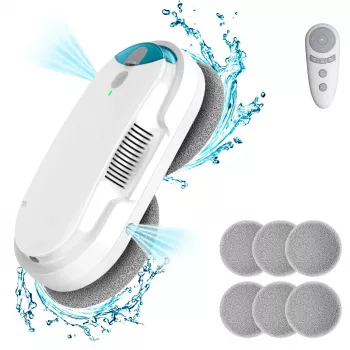
If the goal is cleaner glass with less effort and fewer risky reach-and-balance moments, the Automatic Window Cleaning Robot with Smart Water Spray & Remote Control is built to automate routine window cleaning with controlled misting and remote-guided movement. It’s a practical upgrade for large windows, sliding doors, and regular touch-ups where consistency matters.
- One Room, Real Progress: A Simple Step-by-Step Guide for Stress-Free Home Organization
- Maximize Function, Minimize Clutter | Multifunctional Room Layouts eBook
FAQ
Will a window cleaning robot work on framed windows and sliding doors?
It works best on smooth glass, but thick frames can limit how close it cleans to the border. Use the remote to run a perimeter pass, and reposition the robot to cover narrow side strips if needed.
Do you need to use cleaning solution or just water?
Water is often enough for maintenance cleaning and light film. If using a solution, keep it glass-safe and diluted, use very small amounts, and follow the device guidance to avoid over-wetting.
How can streaks be reduced on sunny or very dirty windows?
Pre-dust first, use a lighter mist, and start with clean pads. For best finishing, swap to a drier pad for a second pass, and avoid working on hot, sun-baked glass when possible.






Leave a comment