35,000RPM Cordless Nail Drill: Safe RPM & Bit Guide
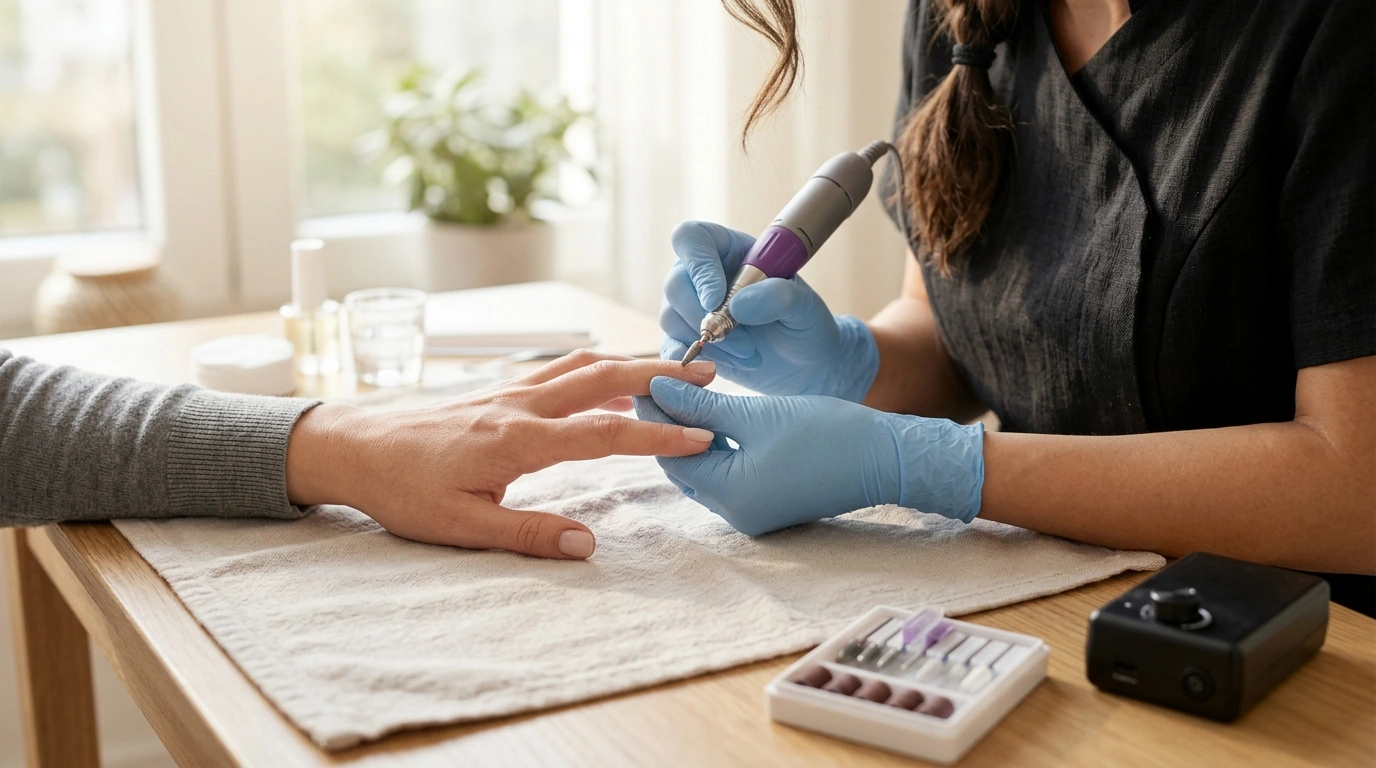
Rechargeable Electric Nail Drill 35,000RPM Cordless E File for Manicure & Pedicure
A cordless e file can cut down the time spent on prep, shaping, and product removal—when it delivers stable speed control, comfortable handling, and enough power for the service. This 35,000RPM rechargeable nail drill is built for at-home users and mobile techs who want a compact tool for manicures and pedicures with adjustable RPM, direction control, and cordless freedom.
What a 35,000RPM cordless nail drill is best for
A higher max RPM doesn’t mean you should always work fast; it means you have headroom when you need it. With the right bit and technique, a 35,000RPM cordless drill can cover most day-to-day nail tasks without being tied to a cord.
- Product removal: Thinning and lifting gel polish, builder gel, dip, and soft gel extensions with the right bit and light pressure.
- Prep and shaping: Refining sidewalls, smoothing surface texture, and shaping the free edge.
- Cuticle work: Gentle detailing around the cuticle area using fine, safety-focused bits.
- Pedicure care: Smoothing rough edges and tidying toenail shaping (avoid aggressive use on skin).
- Mobile setups: Cordless operation reduces cable drag and workstation clutter.
Features that matter during real services
Specs look great on a product page, but a drill earns its keep during long removal sessions and detail work near the cuticle. These are the features that tend to make the biggest difference in day-to-day use.
- RPM range and stability: Consistent speed is more important than a high maximum; stable RPM helps prevent skipping and heat buildup.
- Cordless battery performance: Aim for run time that fits multiple sets and charging that fits your routine.
- Forward/reverse direction: Supports both left- and right-handed use and safer working angles.
- Comfort and control: A balanced handpiece can reduce fatigue during removal and refinement.
- Low vibration feel: Less vibration improves accuracy and can reduce hand strain during longer sessions.
How to use RPM effectively (and avoid heat)
Heat is almost always a technique issue: too much pressure, staying in one spot, using the wrong bit, or running a dull bit. Use RPM as a fine-tuning tool—not a substitute for control.
- Start low, increase gradually: Begin around a low-to-mid setting until the bit tracks smoothly, then increase only as needed.
- Match RPM to the task: Lower RPM for detailing and cuticle areas; moderate for refining; higher for bulk removal when technique is controlled.
- Keep the bit moving: Staying in one spot creates friction heat quickly—use continuous, light passes.
- Use light pressure: Let the bit do the work; pressing harder increases heat and the risk of damage.
- Work in zones: Remove product in sections (center, sidewalls, near cuticle) instead of sweeping aggressively across the entire nail.
If the client feels warmth or stinging, treat it as a stop signal: lift off, reassess your bit choice, reduce pressure, and confirm you’re not grinding on the natural nail.
Choosing bits for manicure and pedicure work
The bit you choose is just as important as the drill itself. A great cordless nail drill paired with the wrong bit can feel harsh, vibrate, and generate heat—while the right bit can make lower speeds feel smooth and efficient.
- Material basics: Carbide is common for removal; ceramic can run cooler; diamond is often used for fine detailing.
- Bit shape selection: Safety-focused shapes help reduce accidental digging near the cuticle and sidewalls.
- Grit matters: Coarse grits remove faster but can create heat and damage if technique is heavy-handed; fine grits are safer for finishing.
- Sanitation: Use clean, disinfected bits for each service; replace worn bits that start to drag or chatter.
- Beginner-friendly approach: Prioritize fine-to-medium bits and slower speeds until control is consistent.
Bit selection guide by task
| Task | Recommended bit type | Suggested RPM range | Technique notes |
|---|---|---|---|
| Gel polish removal | Fine/medium removal bit (carbide or ceramic) | 8,000–15,000 | Thin the product; stop before the natural nail is exposed |
| Builder gel/soft gel overlay reduction | Medium removal bit | 12,000–22,000 | Use light pressure; keep movement continuous |
| Refining shape and surface | Fine barrel or sanding band (fine grit) | 6,000–12,000 | Short, controlled strokes; avoid sidewall digging |
| Cuticle detailing | Fine diamond/safety bit | 3,000–8,000 | Feather-light touch; work at a shallow angle |
| Toenail shaping/refinement | Fine/medium file bit | 5,000–12,000 | Avoid skin contact; focus on nail plate and edge only |
Safety and nail health essentials
For additional general guidance on nail products and exposure considerations, review resources from the U.S. Food & Drug Administration and the CDC/NIOSH nail salon safety pages.
Care, charging, and long-term performance
A practical pick for cordless services
In-stock picks
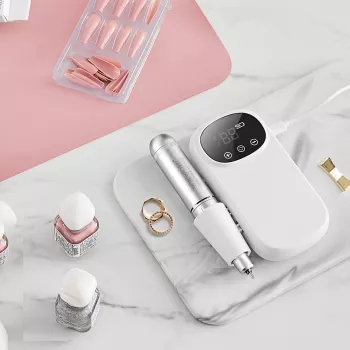
- Rechargeable Electric Nail Drill 35,000RPM Cordless E File for Manicure Pedicure
- One Room, Real Progress: A Simple Step-by-Step Guide for Stress-Free Home Organization
- Maximize Function, Minimize Clutter | Multifunctional Room Layouts eBook
FAQ
Is 35,000RPM too fast for natural nails?
No—35,000RPM is a maximum, not a required working speed. Natural nails are typically worked at lower RPM with fine bits, light pressure, and constant motion to avoid thinning and heat.
What RPM should be used to remove gel polish without burning?
A practical starting range is often around 8,000–15,000 RPM with a fine-to-medium removal bit, then adjust upward only if the bit is tracking smoothly. Keep the bit moving with minimal pressure and stop before you reach the natural nail; dull bits also create more heat.
Can a cordless e file be used for pedicures?
Yes—cordless e files work well for toenail shaping/refinement and product removal on toenails. Avoid aggressive use on skin or calluses unless specifically trained and using the right tools, and keep hygiene standards high.

Leave a comment