Comfort Stretch Fabric Checklist: Elastane, Fit & Care
Comfort Stretch Starts With the Right Checklist
Comfortable stretch is more than “feels soft.” The best everyday fabrics balance recovery (snapping back), breathability, opacity, and durability—without overheating, pilling, or losing shape. Use this checklist to compare labels, test fabric in-hand, and shop smarter for leggings, tees, underwear, denim, loungewear, and work basics.
Start With the Two Types of Stretch: Mechanical vs. Elastane
Stretch can come from the way a fabric is built, what it’s made of, or both. Knowing the difference helps you predict how something will feel after a full day of wear.
- Mechanical stretch: Created by knit structure or weave construction. It’s often breathable and stable, with gentler stretch and good longevity.
- Elastane stretch: Added fibers (spandex/elastane/Lycra) provide higher stretch and shape retention; performance depends on blend, fabric weight, and finishing.
- Best comfort: Usually comes from combining a breathable base fiber (cotton, modal, nylon, polyester) with modest elastane and a construction that supports recovery.
Quick Label Checklist: Fiber Content That Feels Good and Wears Well
Start with the fiber percentages on the label, then consider where you’ll wear the item (commuting, lounging, warm office, errands). These ranges tend to deliver that “move-with-you” feel without turning clingy or flimsy.
- Soft everyday tops: Cotton or modal blends with 2–8% elastane often feel smooth and flexible without feeling “rubbery.”
- Leggings and activewear: Nylon or polyester with 10–25% elastane can improve stretch and hold; prioritize opacity and spring-back recovery.
- Jeans: “Comfort stretch” denim often uses ~1–3% elastane; higher-stretch denim can feel softer but may bag out faster if recovery is weak.
- Underwear and base layers: Breathable knits with 5–12% elastane typically balance comfort and fit; avoid blends that feel plasticky or trap heat.
- If sensitive to heat: Favor breathable fibers and lighter-to-mid weights; heavy synthetics can feel clammy even when stretchy.
Common stretchy fabric options and what they’re best for
| Fabric/blend | Typical stretch feel | Best uses | Watch for |
|---|---|---|---|
| Cotton + elastane | Soft, moderate stretch | Tees, casual dresses, underwear | Can pill; may hold moisture |
| Modal/TENCEL™ lyocell + elastane | Very smooth, drapey stretch | Loungewear, base layers, tees | Snagging on rough surfaces |
| Nylon + elastane | Sleek, strong stretch and recovery | Leggings, sports bras, swim | Heat retention; shine if thin |
| Polyester + elastane | Springy, durable stretch | Activewear, travel pieces | Odor retention unless treated |
| Stretch denim (cotton + elastane) | Firm with give | Jeans, jackets | Bagging at knees/seat if recovery is weak |
Touch-and-Tug Test: How to Judge Comfort in 30 Seconds
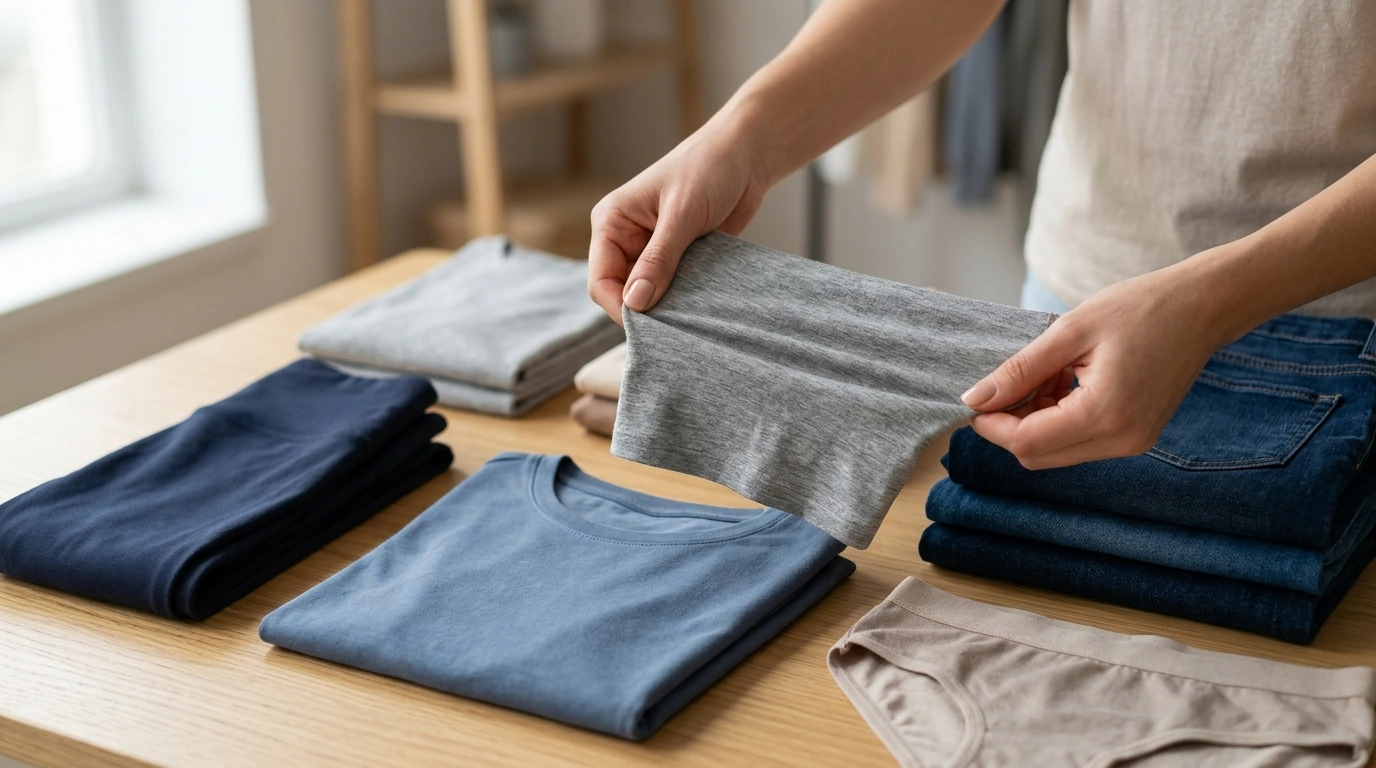
Even the “right” fiber blend can disappoint if the knit is thin, the finish is harsh, or the recovery is weak. These quick checks work in fitting rooms, at home during try-ons, or when evaluating items you already own.
- Hand feel: Rub the surface; comfort fabrics feel smooth or softly textured, not scratchy or stiff.
- Stretch direction: Pull crosswise and lengthwise; everyday comfort often needs crosswise stretch at minimum, with controlled lengthwise stretch for stability.
- Recovery test: Stretch a small section and release; strong recovery returns quickly with minimal rippling or “waves.”
- Opacity check: Stretch over a hand or bright light; thin knits can go sheer when stretched even if they feel substantial at rest.
- Noise and cling: Swish the fabric; very noisy fabrics often feel less cozy, and high-cling fabrics can emphasize lines.
Fit Comfort Checklist: Where Stretch Matters Most
Two items with the same fabric content can feel completely different based on fit details. Focus on the areas that work hardest during sitting, bending, and walking.
- Waistbands: Look for stable stretch with gentle compression; overly tight elastics cause rolling, digging, and discomfort after meals or sitting.
- Knees, elbows, and seat: Good recovery prevents bagging; check for fabric that springs back after repeated bending.
- Seams and stitching: Stretch fabrics need stretch-friendly stitches (e.g., zigzag/overlock/coverstitch); rigid stitching can pop or feel restrictive.
- Gussets and panels: For leggings and underwear, gussets improve mobility and reduce seam irritation.
- Size strategy: If between sizes, choose based on recovery—strong recovery can support sizing down; weak recovery usually needs true-to-size to avoid distortion.
Breathability, Temperature, and Moisture: Comfort Beyond Stretch
Care and Longevity Checklist: Keep Stretch From Failing Early
For care labels and what they mean, the Federal Trade Commission (FTC) Care Labeling Rule is a helpful reference point.
Shopping Checklist: What to Look for Online and In-Store
For a broader look at materials and preferred fiber initiatives, Textile Exchange offers ongoing resources: Textile Exchange.
Printable Checklist and Deep-Dive Reference
If you want a ready-to-use version you can keep on your phone while you shop, see The Ultimate Checklist for Choosing Comfortable, Stretchy Fabrics. For a simple way to streamline your closet decisions so comfortable pieces are easier to grab daily, One Room, Real Progress: A Simple Step-by-Step Guide for Stress-Free Home Organization pairs well with a “keep only what feels good” wardrobe reset.
FAQ
How much elastane is ideal for comfortable everyday clothes?
Good starting ranges are 2–8% for tees and casual tops, 5–12% for underwear and base layers, 10–25% for leggings/activewear, and about 1–3% for denim. The knit structure and fabric weight matter just as much as the percentage, so always check recovery and opacity in addition to the label.
Why do some stretchy pants get baggy at the knees or seat?
That’s usually a recovery problem: the fabric stretches but doesn’t fully snap back. Lightweight knits, lower-quality elastane, or heat damage from frequent hot drying can make bagging worse; testing recovery with a quick tug-and-release before buying helps prevent it.
How can stretchy fabrics be washed without losing their shape?
Use cool-to-warm water, a gentler cycle, and avoid high-heat tumble drying whenever possible (air dry or low heat is safer). Washing inside out, skipping excess fabric softener, and not overloading the washer also reduce abrasion that breaks down stretch fibers.






Leave a comment