Minimalist Solid Wood Sideboard: Calm, Hidden Storage
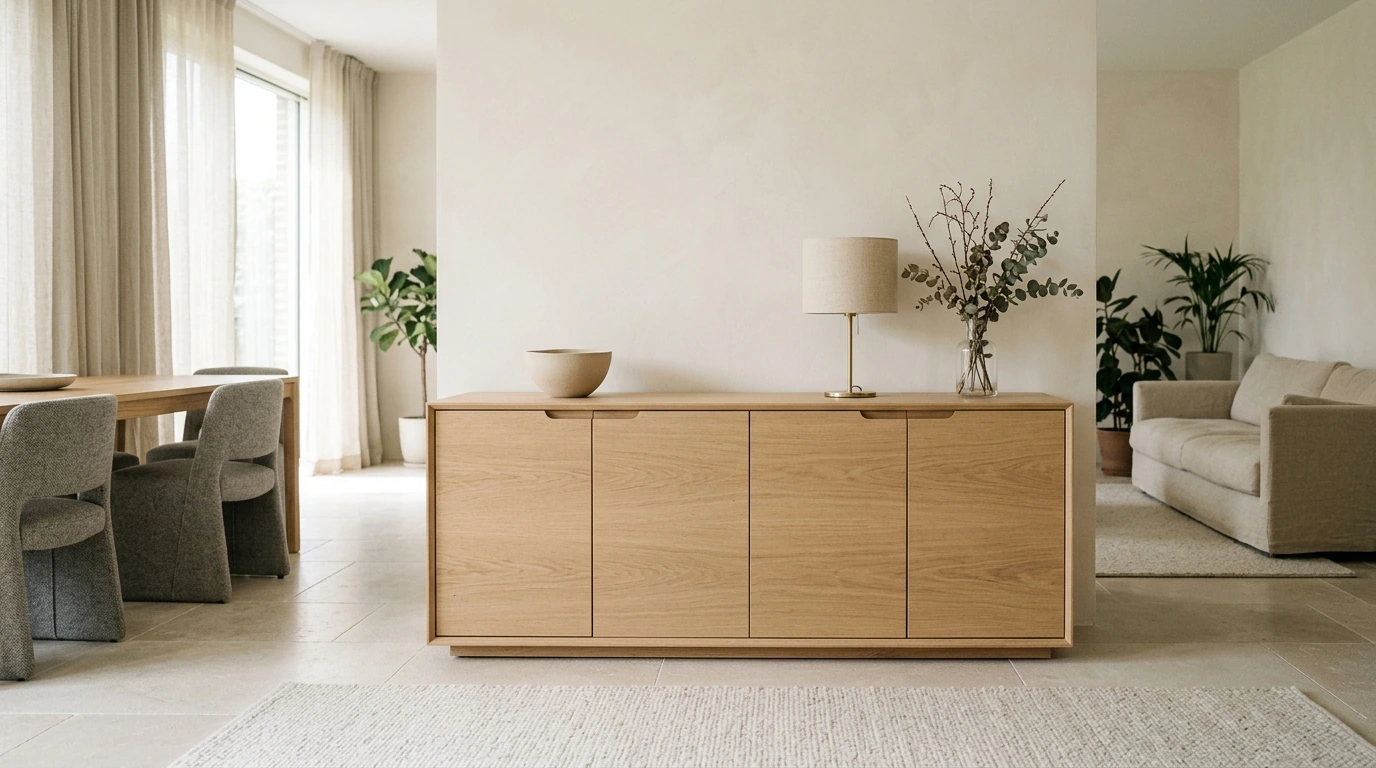
Modern Minimalist Solid Wood Sideboard: Elegant Storage That Calms the Room
A solid wood sideboard can quietly transform a space—adding purposeful storage while keeping sightlines clean and the room feeling composed. The right piece becomes a “home base” for everyday items, so countertops and tabletops stay clear and the room reads more restful at a glance. Below is a practical guide to choosing, placing, styling, and caring for a modern minimalist sideboard in dining rooms, living rooms, and open-plan layouts.
Why a solid wood sideboard fits modern minimalist homes
Minimalist rooms look best when there’s one refined storage zone instead of many small piles spread around. A sideboard consolidates the visual workload: fewer items on display, fewer surfaces competing for attention, and less “where should this go?” stress.
- Creates a single, refined storage zone that reduces visual noise across the room.
- Solid wood brings warmth and texture that balances minimal decor and neutral palettes.
- Low, horizontal furniture helps rooms feel wider and more grounded.
- Works as both functional storage and a display surface for a few intentional objects.
- Pairs easily with contemporary materials like glass, stone, black metal, and linen.
If you’re prioritizing responsible sourcing, look for wood that’s certified by organizations such as the Forest Stewardship Council (FSC), which helps shoppers identify products from responsibly managed forests.
Where it works best: practical placements by room
A sideboard is flexible because it’s shallow enough for many walls, but deep enough to handle real storage. Choose a placement where it can absorb clutter from a nearby “activity zone” (dining, media, entry, work) without interrupting flow.
- Dining room: store serving platters, linens, and glassware; keep the top clear for a lamp or a single centerpiece.
- Living room: use as a media console alternative with concealed storage for cables and accessories.
- Entryway: anchors the wall, holds catch-all items, and supports a mirror for a clean arrival moment.
- Home office: stores paper goods and devices; top becomes a printer station without clutter.
- Open-plan layouts: acts as a subtle boundary between zones while maintaining an airy feel.
Common sideboard uses and what to store
| Placement | Best for storing | Top-surface styling |
|---|---|---|
| Dining area | Serving pieces, table linens, bar tools | Tray + vase or a slim lamp |
| Living room | Games, tech accessories, throws | Two stacked books + sculptural object |
| Entry | Keys, mail, bags, seasonal items | Mirror + bowl + small catchall tray |
| Office | Paper, peripherals, supplies | Printer + one organizer box |
Design details that keep the look minimalist
The most calming sideboards share one trait: they don’t ask for attention. Their design choices support a quiet backdrop so the room feels intentional without feeling “styled.”
- Front profile: flat-panel doors and clean drawer faces keep lines quiet.
- Hardware: hidden pulls or simple linear handles look intentional and wipe clean easily.
- Legs vs. plinth base: legs add airiness; plinth bases feel architectural and grounded.
- Wood tone: lighter woods brighten smaller rooms; medium tones add warmth; darker tones add drama.
- Finish: matte or satin finishes read more modern and reduce glare compared to high gloss.
Sizing and layout: getting proportions right
Minimalism is as much about spacing as it is about objects. A sideboard looks best when it has breathing room and doesn’t fight circulation.
Storage features that make daily life easier
For healthier everyday living, it’s also worth keeping the room comfortable year-round—especially in open-plan spaces. The U.S. EPA’s indoor air quality guidance offers practical tips that pair well with caring for wood furniture and finishes.
Styling a sideboard without clutter
Care and longevity for solid wood furniture
Solid wood rewards consistency: stable conditions, gentle cleaning, and a little prevention. For conservation-style handling tips, the Smithsonian’s collection care guidance on caring for wooden objects is a helpful reference.
A featured option: modern minimalist solid wood sideboard
If you want a streamlined piece that supports a calmer room, consider the Modern Minimalist Solid Wood Sideboard for Elegant Home Storage. It’s designed to deliver elegant, concealed organization while keeping the exterior quiet—ideal for dining rooms, living rooms, and open-plan layouts that need storage without visual heaviness.
To keep the minimalist balance, pair a sideboard with a single large mirror or one substantial piece of art rather than several smaller frames. If your goal is to reduce clutter room-by-room, add a simple plan alongside your furniture choice: One Room, Real Progress: A Simple Step-by-Step Guide for Stress-Free Home Organization can help set up maintainable categories. For layout ideas in tighter spaces, Maximize Function, Minimize Clutter | Multifunctional Room Layouts eBook | Small Space Design Guide | Space-Saving Furniture & Smart Home Ideas supports furniture placement decisions that keep pathways clear.
Quick reference: product snapshot
| Item | Price | Availability |
|---|---|---|
| Modern Minimalist Solid Wood Sideboard for Elegant Home Storage | 863.65 USD | In stock |
FAQ
How do you style a minimalist sideboard without making it look empty?
Use a small number of intentional items with varied height (such as a lamp, vase, and tray), repeat one material or color, and leave negative space so the surface still feels calm.
What should be stored in a sideboard for the most practical everyday setup?
Store items you reach for weekly—linens, serving pieces, glassware, candles, board games, or tech accessories—and use bins or trays inside so categories don’t mix into one messy pile.
How do you protect solid wood from water rings and heat marks?
Use coasters and trivets, wipe moisture quickly, avoid placing hot items directly on the surface, and clean with finish-appropriate products instead of harsh chemicals.




Leave a comment