Small Closet Organization: Declutter, Zone, Store Smart
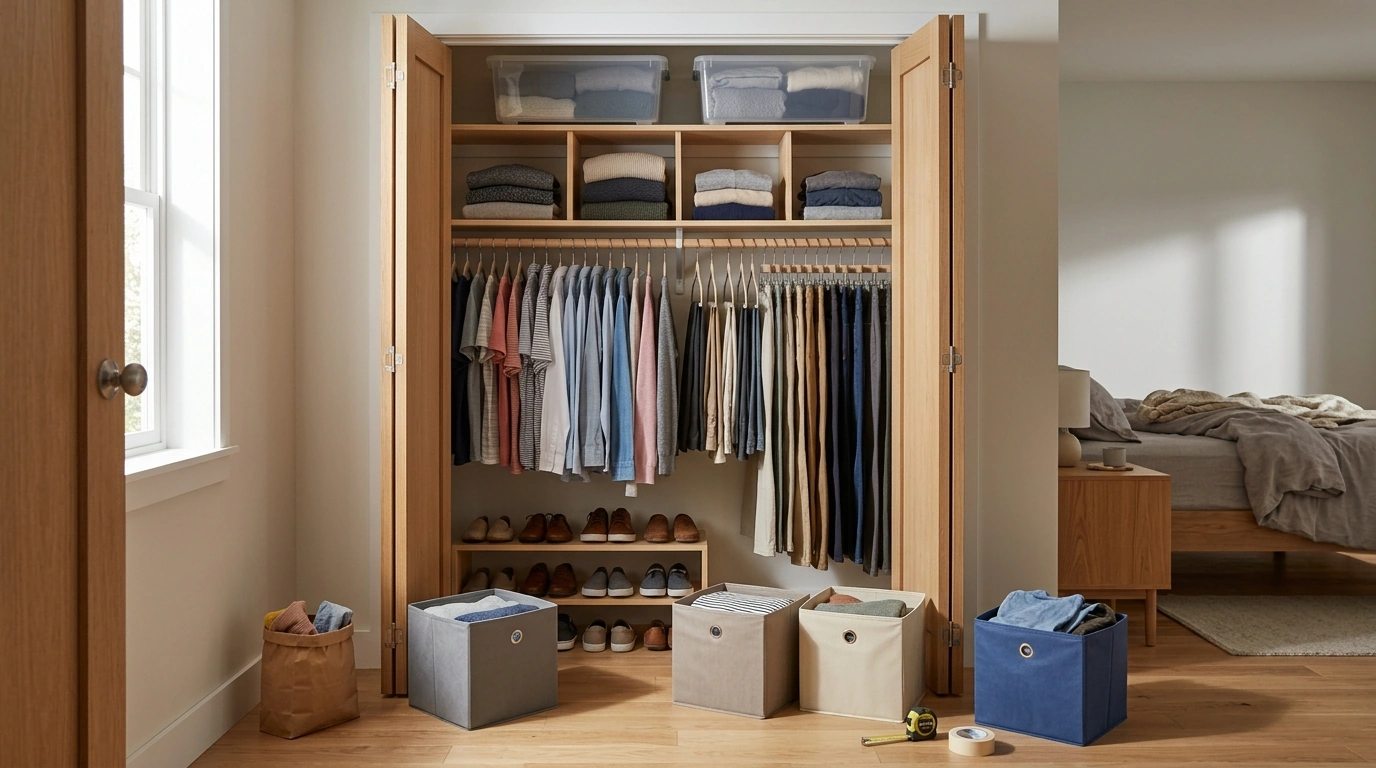
Closet Clarity: Maximize Small Spaces With Smart Organization, Decluttering, and Storage Systems
Small closets can feel impossible when every inch is already spoken for. A workable setup comes from three moves: removing what doesn’t earn its space, assigning clear zones, and choosing storage that matches the closet’s exact dimensions. The goal isn’t a picture-perfect closet—it’s a closet you can use quickly, daily, without creating new piles.
Start with a fast reset, then measure and map your zones before buying anything. Once the basics are in place, a few small habits keep the system running so your closet stays clear even when life gets busy.
Start With a Fast Closet Reset (30–60 Minutes)
A fast reset works best when it’s contained. Instead of emptying the entire closet (and your entire bedroom), pull out one category at a time—tops, pants, shoes, or accessories—so you can finish what you start.
- Empty only one category at a time to avoid a full-room explosion.
- Use a 3-bin decision flow: Keep (wear weekly/monthly), Store (seasonal/occasional), Release (donate/sell/recycle).
- Set a realistic container limit before putting items back (example: shoes must fit on one shelf plus one floor row).
- Check fit and comfort quickly: if it pinches, pulls, or requires “special circumstances,” it moves to Release.
- Create an “exit zone” near the door for donations so the closet doesn’t re-absorb them.
Quick Declutter Decisions for Common Closet Items
| Item type | Keep if… | Store if… | Release if… |
|---|---|---|---|
| Everyday clothing | Worn in the last 4–8 weeks and fits comfortably | Seasonal but worn every year | Not worn in a year (excluding special events) or doesn’t fit |
| Shoes | Comfortable for 30+ minutes and used regularly | Seasonal (boots/sandals) with a clear season plan | Hurts feet, duplicates, or needs repair you won’t schedule |
| Outerwear | Used weekly in its season and layers well | Off-season and bulky | Damaged, rarely used, or replaced by a better option |
| Accessories | Easy to grab and actually completes outfits | Special-occasion pieces | Tangled, missing pairs, or never reached for |
If you plan to donate clothing, stick to reputable guidance so items can actually be reused or recycled. The FTC’s donation tips and the Goodwill donation guidelines help clarify what’s typically accepted.
Measure, Map, and Assign Zones Before Buying Bins
Buying containers first is how “organizing” turns into storing clutter in prettier boxes. Measure the interior width, depth, and hanging height so everything you add fits the closet you actually have.
- Measure interior width, depth, and hanging height (short hang vs. long hang) to avoid “almost fits” purchases.
- Define zones by frequency: daily items at eye/hand level; weekly items slightly higher; rarely used items up high or in labeled boxes.
- Split hanging space into two tiers when possible (upper for tops/jackets, lower for pants/skirts) to double capacity.
- Use vertical space intentionally: stackable shelves, tiered hangers, and slimline hangers reduce wasted air gaps.
- Plan one “landing strip” section for work bags, gym gear, or school items to prevent floor pileups.
A simple mapping trick: mark “prime real estate” (easy reach) with painter’s tape along the wall or shelf edge. If something doesn’t deserve prime access, it doesn’t belong there—especially in a tight closet.
Storage Solutions That Work in Tight Closets
Small closets succeed with fewer, more consistent systems. Mixing three different shoe organizers or five hanger types creates friction—then clutter returns.
- Uniform slim hangers: reduces rod bulk and keeps garments aligned, making gaps visible so overstuffing is less likely.
- Shelf dividers: prevents sweater and denim stacks from collapsing into messy piles.
- Clear, labeled boxes for off-season items: quick visual confirmation without repeated rummaging.
- Door and wall real estate: over-the-door hooks for robes/belts; narrow organizers for accessories if the door closes cleanly.
- Shoe strategy: choose one method (shelf, rack, boxes) and enforce the capacity rule; avoid mixing systems that waste space.
For textiles that are beyond wear, consider responsible disposal options. The EPA’s textiles and recycling resources are a helpful starting point for reduce/reuse/recycle pathways in your area.
Simple Layouts for Common Small-Closet Types
Not every closet needs a renovation. Most need a clear layout decision so categories don’t drift into each other.
A Weekly Maintenance Routine That Prevents Re-Clutter
Step-by-Step Support: Closet Clarity Digital Guide
A structured plan turns organizing from a vague goal into a repeatable system with clear checkpoints. If you want a guided, done-in-an-afternoon approach that’s designed specifically for small closets, start with Closet Clarity: Maximize Small Spaces – Smart Small Closet Organization Guide (Digital Download).
For broader whole-home momentum, pair it with One Room, Real Progress: A Simple Step-by-Step Guide for Stress-Free Home Organization or expand your space-planning options with Maximize Function, Minimize Clutter | Multifunctional Room Layouts eBook.
If Space Is Still Tight: What to Move Out of the Closet
FAQ
How do small closets stay organized long-term?
They rely on clear capacity limits per category, zones based on how often items are used, and a short weekly reset. Avoid adding new storage until you’ve reduced volume to match the space.
What’s the best way to organize a closet with no shelves?
Use slim hangers for hangables, set a single shoe zone on the floor, and add stackable bins/cubes for foldables while keeping the center clear. Label containers so items don’t drift into random piles.
How many clothes should a small closet hold?
Only what fits without crushing: hangers should slide easily and stacks shouldn’t topple when you pull one item. Set a fixed limit per category (like a single shelf for denim) and maintain it with one-in/one-out.







Leave a comment