32ft PVC Vent Hose for 12in Exhaust Fans (Flexible)
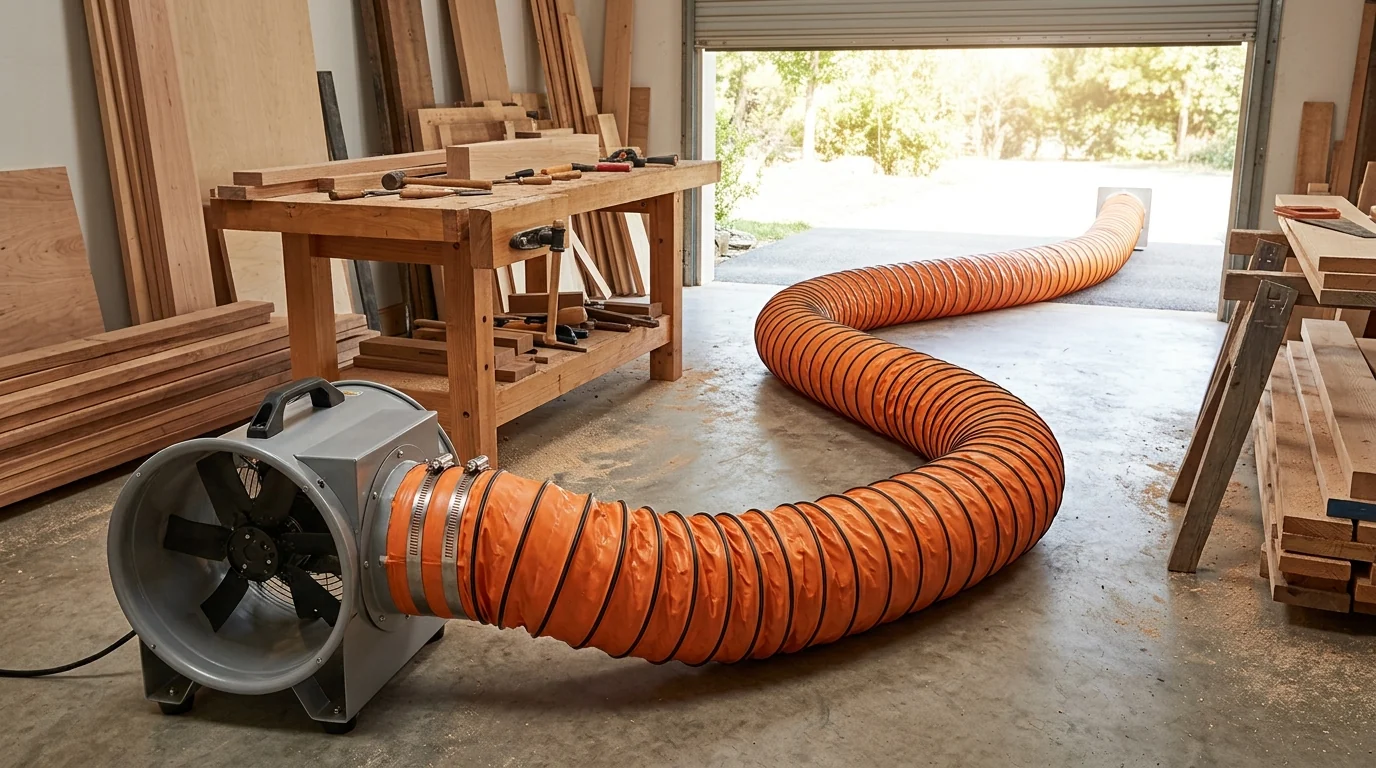
32FT Flexible PVC Ventilation Duct Hose for 12-Inch Exhaust Fans: Durable Airflow for Jobsite and Workshop Venting
A long, flexible duct can make temporary ventilation safer and more effective in garages, workshops, basements, and jobsite setups. This 32-foot PVC ventilation duct hose is sized for 12-inch exhaust fans and designed to route fumes, dust, heat, or stale air where it needs to go—without rigid ductwork. When you can position the fan where it captures the problem air best, then extend the discharge to a controlled outlet point, the whole space tends to feel cleaner, cooler, and easier to work in.
What This Ventilation Duct Hose Is Designed For
- Moves air from a 12-inch exhaust fan to a specific outlet point, helping control where air, odor, or particulates travel.
- Useful for temporary or mobile ventilation setups: construction sites, crawlspaces, paint and solvent work zones, and general workshop exhaust.
- Helps reduce recirculation by extending the discharge away from doors, windows, or work areas.
- Supports flexible routing around obstacles compared with rigid ducting, especially where straight runs are not possible.
For many spaces, the challenge isn’t “getting a fan”—it’s getting the air to leave the building without drifting back in or blowing directly across the work area. A long duct gives you more control over that discharge point, especially when the nearest window, vent opening, or roll-up door isn’t close to where the work is happening.
Key Features to Look For in a 12-Inch PVC Ventilation Duct
- Length and coverage: a 32-foot run can span larger rooms, reach outside from interior work areas, or connect across multiple zones.
- Flexibility: bends and turns should be possible without cracking, while still maintaining a reasonably open internal diameter for airflow.
- Material toughness: PVC is commonly chosen for abrasion resistance and easy wipe-down after dusty or dirty jobs.
- Connection reliability: ends should fit securely on a 12-inch fan outlet or adapter and allow clamping or strapping without slipping.
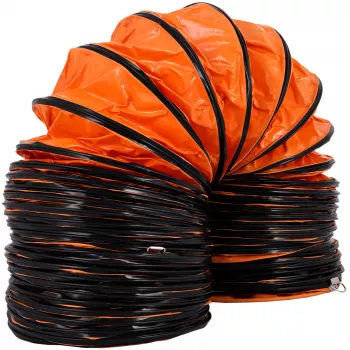
- Storage and handling: a duct that folds or compresses more easily can save space between uses and reduce setup time.
In practical terms, the best duct is the one that sets up quickly and stays put. If the hose kinks easily or won’t clamp down tight, you lose airflow and waste time trying to “make it work” with tape and improvised straps.
Sizing and Compatibility: Getting the Best Airflow From a 12-Inch Fan
- Match the duct diameter to the fan outlet (12-inch) to minimize leakage and reduce the need for improvised adapters.
- Longer duct runs increase resistance; keep the path as straight as possible and avoid sharp kinks to maintain airflow.
- Support the duct on longer horizontal runs to prevent sagging, which can create low spots that restrict flow.
- Check how the duct will be secured: common options include worm-gear clamps, duct straps, or tie-downs depending on the fan collar design.
Quick Compatibility Checklist
| Item to check | Why it matters | Practical tip |
|---|---|---|
| Fan outlet size | Prevents air leaks and weak airflow | Confirm the fan has a true 12-inch collar or use a proper reducer/adapter |
| Run length and bends | Affects static pressure and delivered airflow | Use the shortest route available; avoid tight 90° bends where possible |
| Connection method | Stops the duct from popping off under pressure | Clamp the duct to the collar and add a secondary strap if used overhead |
| Support and routing | Reduces kinks and collapse points | Use hooks/straps for overhead runs; keep the duct off sharp edges |
If airflow seems weaker than expected, the culprit is often a tight bend near the fan outlet, a partially crushed section under a door, or a loose connection that’s dumping air before it reaches the exit point. A few small routing changes can make a noticeable difference.
Common Use Cases and Setup Ideas
Installation and Handling Tips for Better Performance
For guidance on general ventilation principles and workplace controls, see OSHA’s Ventilation topic page. When dealing with specific chemicals, cross-check exposure information using the NIOSH Pocket Guide to Chemical Hazards.
Care, Storage, and Longevity
Product Options In Stock
- 32FT Flexible PVC Ventilation Duct Hose for 12-Inch Exhaust Fans ($47.51) — extended reach and flexible routing for temporary ventilation layouts where rigid ductwork is impractical.
- Maximize Function, Minimize Clutter | Multifunctional Room Layouts eBook ($20.99) — helpful for planning efficient work zones so fans, hoses, and tools don’t crowd the area.
- One Room, Real Progress: A Simple Step-by-Step Guide for Stress-Free Home Organization ($7.99) — a practical approach to keeping storage, walkways, and setup space clear for safer projects.
FAQ
Will a 12-inch duct hose fit any 12-inch exhaust fan?
Many 12-inch fans use a 12-inch outlet collar, but some collars vary slightly by design. Measure the outlet, confirm whether there’s a collar/adapter, and use a proper clamp (or a reducer/adapter) for a secure, leak-resistant fit.
Does a longer duct reduce airflow?
Yes—longer runs and extra bends add resistance and can reduce delivered airflow. Use the shortest practical route, avoid sharp kinks, support the hose to prevent sagging, and seal connections tightly to limit leaks.
Can this duct be used for removing fumes from painting or solvents?
It can help route air away from the work zone, but overall safety depends on the specific chemicals and the fan/equipment being used. Ensure adequate makeup air, keep the discharge away from people and openings, and use the correct ventilation and filtration approach for hazardous vapors when required.






Leave a comment